Last updated: August 19, 2026
Explore the plug-in meters & smart plugs guide for the full picture.
Understanding Outlet Power Meters and Their Practical Uses
Outlet power meters are devices designed to monitor the energy consumption of electrical appliances. They provide insights into power usage, voltage, current, and even the cost associated with running various devices in the home or office. When considering an outlet power meter, it’s essential to evaluate the features that matter most for your needs. Some models offer multiple display modes and overload protection, while others may focus on energy tracking and data memory functions. Balancing these features against your specific requirements will help you make an informed choice.
Disclosure: As an Amazon Associate I earn from qualifying purchases.
Prefer to browse a couple of relevant options before you decide? Check current options on Amazon.
Why This Matters
Using an outlet power meter can lead to better energy management in your household or workspace. By understanding how much electricity your devices consume, you can identify which appliances are energy hogs and make informed decisions about usage or replacements. This not only helps in reducing electricity bills but also contributes to energy conservation efforts. Moreover, these devices can enhance safety by alerting you to potential overloads, which is crucial for preventing electrical hazards. Knowing the energy consumption of your appliances can also aid in planning for energy efficiency improvements.
Key Benefits
What to Expect
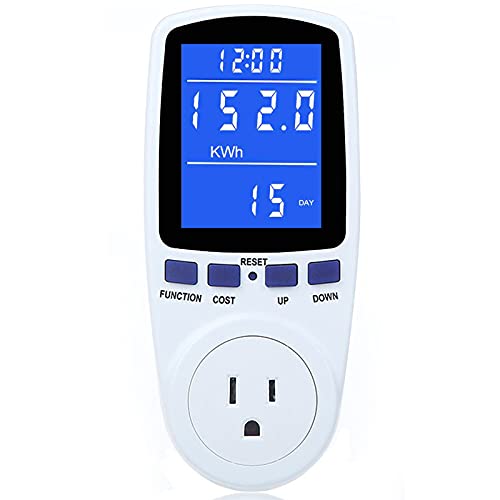
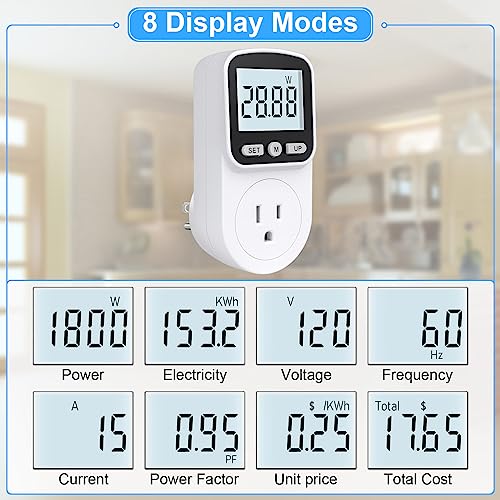
- Various Monitoring Parameters: The power meter plug can monitor the powe…
- Adjustable Backlight Time: Our upgraded watt meter has 5 options of back…
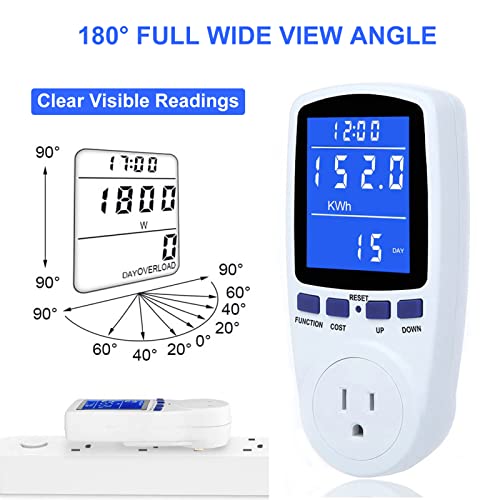
- Upgraded LCD display: With large screen size 2.36 inch x 1.85 inch, clea…
- Energy Monitoring: Outlet power meters provide real-time data on energy consumption, allowing users to track how much power individual devices use.
- Cost Calculation: Many models can estimate the cost of running appliances, which helps in budgeting and managing expenses.
- Overload Protection: Some outlet power meters include safety features that prevent appliances from drawing too much power, reducing the risk of electrical fires.
- Data Memory: These devices often retain usage data, making it easier to review historical consumption patterns even after being unplugged.
- Multiple Display Modes: Users can switch between various parameters such as voltage, current, and power factor, providing a comprehensive view of electrical performance.
Common Drawbacks & Limitations
While outlet power meters offer several advantages, there are some limitations to consider. Many models require a standard electrical outlet, which may limit their use in certain locations or with specific appliances. Additionally, not all meters provide comprehensive data; some may only display basic information, which might not be sufficient for all users. Another consideration is the learning curve associated with using these devices. Some users may find the various modes and settings confusing, particularly if they are not tech-savvy. Moreover, the accuracy of readings can vary based on the model and its specifications.
What to Look For (Buyer’s Checklist)
- Display Type: Look for a clear, backlit display that is easy to read from different angles. A good display enhances usability, especially in low-light conditions.
- Monitoring Parameters: Check the range of metrics the power meter can track (e.g., watts, volts, kilowatt-hours). More metrics provide a comprehensive view of your energy consumption and can guide your energy-saving efforts.
- Overload Protection: Ensure the meter has a reliable overload protection feature. This is critical for preventing damage to both the meter and your appliances.
- Data Memory Function: A model that retains data after being unplugged can help you track usage over time without losing information during power outages.
- Ease of Use: Consider how intuitive the interface is. A user-friendly design can make it easier to switch between modes and understand the data displayed.
How to Choose for Your Situation

When selecting an outlet power meter, consider the types of devices you plan to monitor. If you frequently use high-wattage appliances, prioritize models with robust overload protection. For general household use, look for meters with versatile monitoring capabilities that can track various parameters. If you are interested in long-term energy management, choose a model with a data memory function and cost calculation features. This can help you analyze trends in energy consumption and identify opportunities for savings.
Care, Safety, and Longevity Tips
To ensure the longevity of your outlet power meter, avoid exposing it to extreme temperatures or moisture. Regularly inspect the device for any signs of wear or damage, especially the plug and socket connections. When using the meter, ensure it is plugged into a properly grounded outlet to minimize electrical hazards. If the meter displays an overload warning, immediately disconnect the appliance to prevent potential damage or fire risks.
Recommended Picks
The Upgraded Watt Power Meter Plug Home Electrical Usage Monitor is known for its clear display and multiple monitoring modes, making it suitable for various household applications. The HBN Watt Meter Plug offers an extensive range of display options and is designed for easy readability, enhancing user experience. For those interested in smart technology, the Govee Smart Plug with Energy Monitoring provides real-time tracking through an app, allowing for remote management of devices. Lastly, the Upgraded Watt Meter Power Meter Plug combines multiple functionalities with overload protection, appealing to users who want comprehensive energy monitoring.
FAQ
- How do I set up an outlet power meter? Most outlet power meters are plug-and-play devices. Simply plug the meter into an outlet and then plug your appliance into the meter to start monitoring.
- Can I use an outlet power meter with any appliance? Yes, as long as the appliance’s wattage does not exceed the meter’s maximum capacity, it can be used with most standard devices.
- What should I do if the meter shows an overload warning? Disconnect the appliance immediately and check its wattage. If necessary, adjust the overload settings on the meter before reconnecting.
- Do these meters work with smart home systems? Some models, like the Govee Smart Plug, are designed to integrate with smart home systems, enabling remote monitoring and control.
- Will my data be lost if the power goes out? Many modern outlet power meters have a data memory function that retains information even during power outages, allowing you to track usage over time.
What Most Buyers Overlook
- The right choice depends on your daily constraints, not just the most advanced option.
- Ease of setup, maintenance, and fit often matter more than one extra feature.
Conclusion
Outlet power meters are valuable tools for anyone looking to understand and manage their energy consumption more effectively. By considering the features that matter most, users can select a model that suits their needs while promoting safety and efficiency. Whether for personal use or in a professional setting, these devices can help foster more informed energy choices.
A Couple of Relevant Options