Last updated: July 11, 2026
Explore the setup & energy tracking guide for the full picture.
Understanding Power Consumption Monitors and Their Benefits
Power consumption monitors are devices designed to track and display the energy usage of household appliances. These tools can help users understand their energy consumption patterns, potentially leading to more informed decisions about energy use and cost management. When choosing a power consumption monitor, it’s essential to consider the specific features that align with your needs. While many monitors offer basic tracking capabilities, others provide advanced functionalities that may enhance your understanding of energy usage.
Disclosure: As an Amazon Associate I earn from qualifying purchases.
Prefer to browse a couple of relevant options before you decide? Check current options on Amazon.
Why This Matters
Understanding how much energy your appliances consume can lead to more efficient energy use and lower electricity bills. By monitoring power consumption, you can identify which devices use the most energy and adjust your usage habits accordingly. This awareness can promote energy conservation and contribute to a more sustainable lifestyle. Additionally, power consumption monitors can help detect faulty appliances that may be consuming excessive power. Through regular monitoring, users can take preventive measures before encountering significant energy waste or appliance failure.
Key Benefits
What to Expect
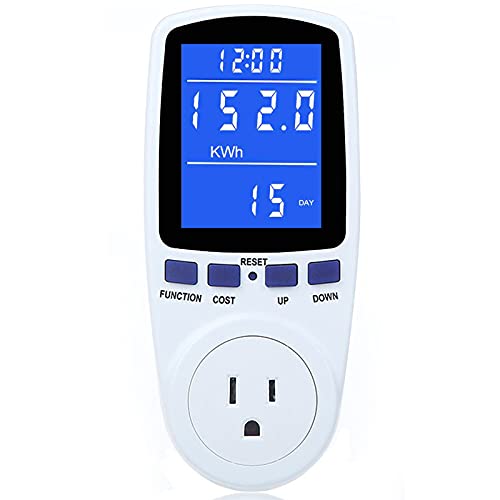
- Various Monitoring Parameters: The power meter plug can monitor the powe…
- Adjustable Backlight Time: Our upgraded watt meter has 5 options of back…
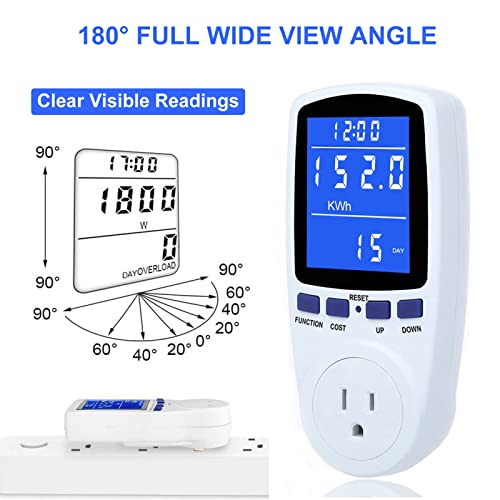
- Upgraded LCD display: With large screen size 2.36 inch x 1.85 inch, clea…
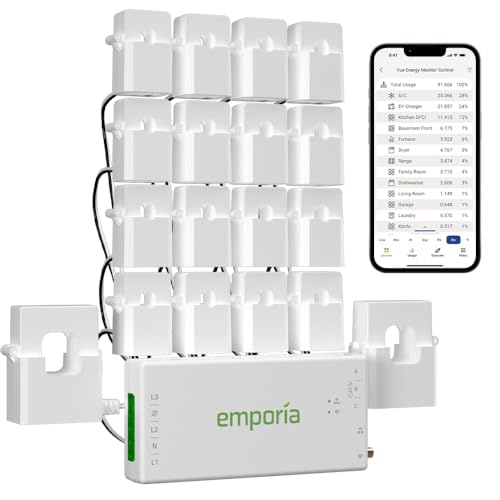
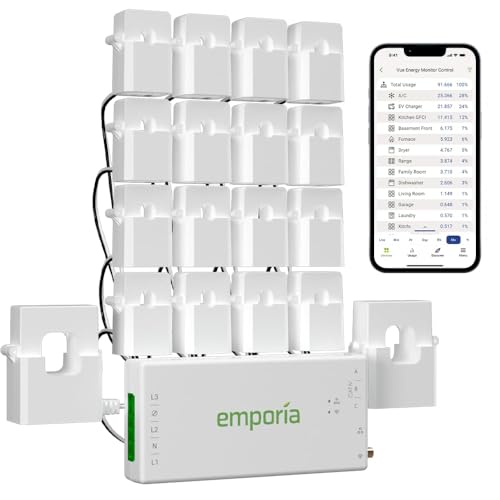
- INSTALLS IN CIRCUIT PANEL of most homes with clamp-on sensors. Supports …
Power consumption monitors offer several advantages, including:
- Real-Time Monitoring: Many devices provide real-time data on energy usage, allowing users to see the immediate impact of their appliances on energy consumption.
- Data Tracking: Monitors often track cumulative energy usage over time, helping users identify trends and adjust habits to save energy.
- Cost Estimation: Some models calculate the cost of energy consumption, offering insights into how much specific devices contribute to electricity bills.
- Safety Features: Many power monitors include overload protection, alerting users when an appliance exceeds safe operating limits.
- Multiple Display Modes: Users can switch between various modes to view different parameters, enhancing the understanding of energy consumption.
Common Drawbacks & Limitations
While power consumption monitors are beneficial, they do come with some limitations:
- Complexity: Some advanced models may have a steep learning curve, making it challenging for users unfamiliar with technology.
- Limited Scope: Many monitors can only track individual devices rather than providing a comprehensive view of total home energy consumption.
- Dependence on Power Supply: If the monitor loses power, it may reset and lose data unless it has a backup battery or memory function.
What to Look For (Buyer’s Checklist)
When selecting a power consumption monitor, consider the following criteria:
- Display Type: A clear and backlit display is crucial for reading data easily in different lighting conditions. A large screen with wide viewing angles can enhance usability.
- Monitoring Capabilities: Look for monitors that track multiple parameters, such as voltage, current, and power factor. This information provides a more comprehensive understanding of energy use.
- Data Storage: Ensure the monitor has a data memory function that retains information even when unplugged. This feature allows you to access previous usage data after a power outage.
- Overload Protection: A safety feature that alerts users when an appliance exceeds its power limit is essential for preventing potential hazards.
- Ease of Use: Check for user-friendly interfaces and simple reset options. A straightforward setup can enhance your experience and encourage regular use.
How to Choose for Your Situation

Selecting the right power consumption monitor depends on your specific needs. If you are primarily interested in tracking a single appliance, a plug-in model may suffice. However, for a more comprehensive view of your entire home, consider a monitor that installs in your circuit panel. If you frequently use multiple devices, look for monitors with multiple display modes and data tracking features. For those interested in smart home integration, choose models that offer Wi-Fi connectivity and app compatibility for remote monitoring.
Care, Safety, and Longevity Tips
To ensure the longevity of your power consumption monitor, follow these tips:
- Keep Dry: Avoid exposing the monitor to moisture, which could damage the device.
- Regular Maintenance: Periodically check for firmware updates (if applicable) to ensure optimal performance.
- Safe Placement: Position the monitor in a location that is not exposed to excessive heat or direct sunlight to prevent overheating.
Recommended Picks
Several power consumption monitors are available, each with unique features: – Upgraded Watt Power Meter Plug Home Electrical Usage Monitor offers multiple monitoring parameters and a clear backlit display, making it suitable for everyday use.
- Emporia Vue 3 Home Energy Monitor provides comprehensive home energy tracking and smart integration, ideal for those wanting to manage energy usage effectively.
- HBN Watt Meter Plug features a wide viewing angle and multiple data display options, allowing users to monitor various electrical parameters easily.
FAQ
1. How does a power consumption monitor work? A power consumption monitor connects to an electrical outlet and tracks the energy usage of plugged-in devices, providing real-time data on power consumption. 2. Can I use a power consumption monitor for all appliances? Most monitors can be used for standard household appliances, but check the device’s specifications for maximum load capacity to avoid damage. 3. Do power consumption monitors require batteries? Many plug-in models operate directly from the electrical outlet and do not require batteries, while some advanced models with additional features may have a backup battery. 4. How accurate are power consumption monitors? Most monitors provide accurate readings within a small margin of error, often around ±2%, depending on the model and its calibration. 5. Can I track my energy usage remotely? Some models, especially smart home monitors, offer app connectivity, allowing users to monitor energy usage remotely via smartphones or tablets.
What Most Buyers Overlook
- The right choice depends on your daily constraints, not just the most advanced option.
- Ease of setup, maintenance, and fit often matter more than one extra feature.
Conclusion
Power consumption monitors are valuable tools for anyone looking to track and manage their energy usage. By understanding their features and benefits, you can make informed decisions that contribute to energy efficiency and cost savings in your home. Whether you choose a simple plug-in model or a comprehensive home energy monitor, these devices can provide insights that lead to more responsible energy consumption.
A Couple of Relevant Options